Use cases
What we can do for your site
Five kinds of site we are designing for. We have tested in a climate chamber, not yet in the field. The first deployment is planned for summer 2027.
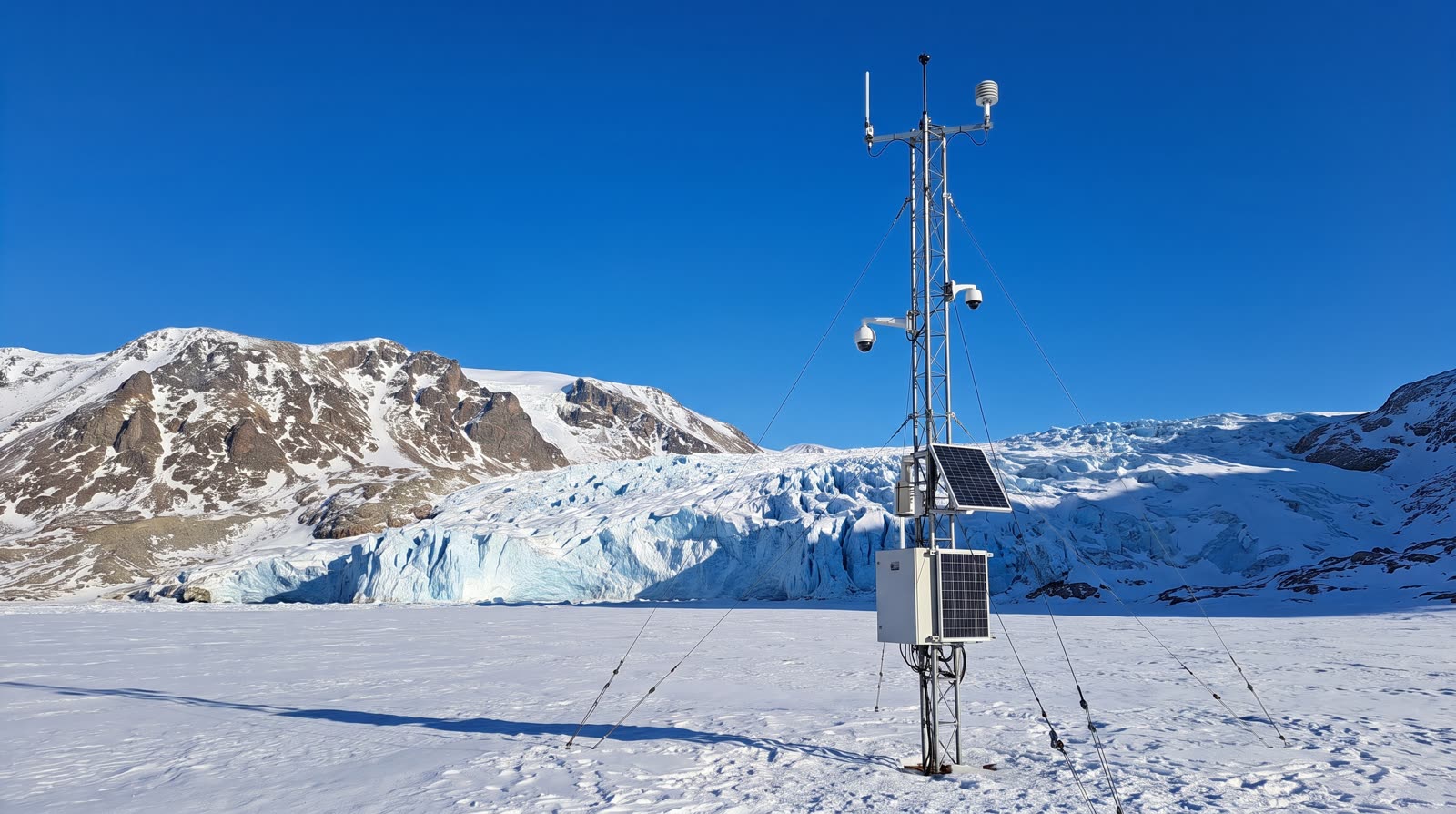
Our focus now
Glacier and ice sheet monitoring
Each station on the ice carries its own logger and its own link home. When one goes quiet, you often find out at the next visit.
With Nuna
- Every mast joins one mesh, and one uplink serves the site
- A silent station shows up in the data, not at the next visit
- Adding a mast adds a node, not another subscription
What you might measure
- Air temperature
- Wind
- Snow height
- Ice motion
- Ablation
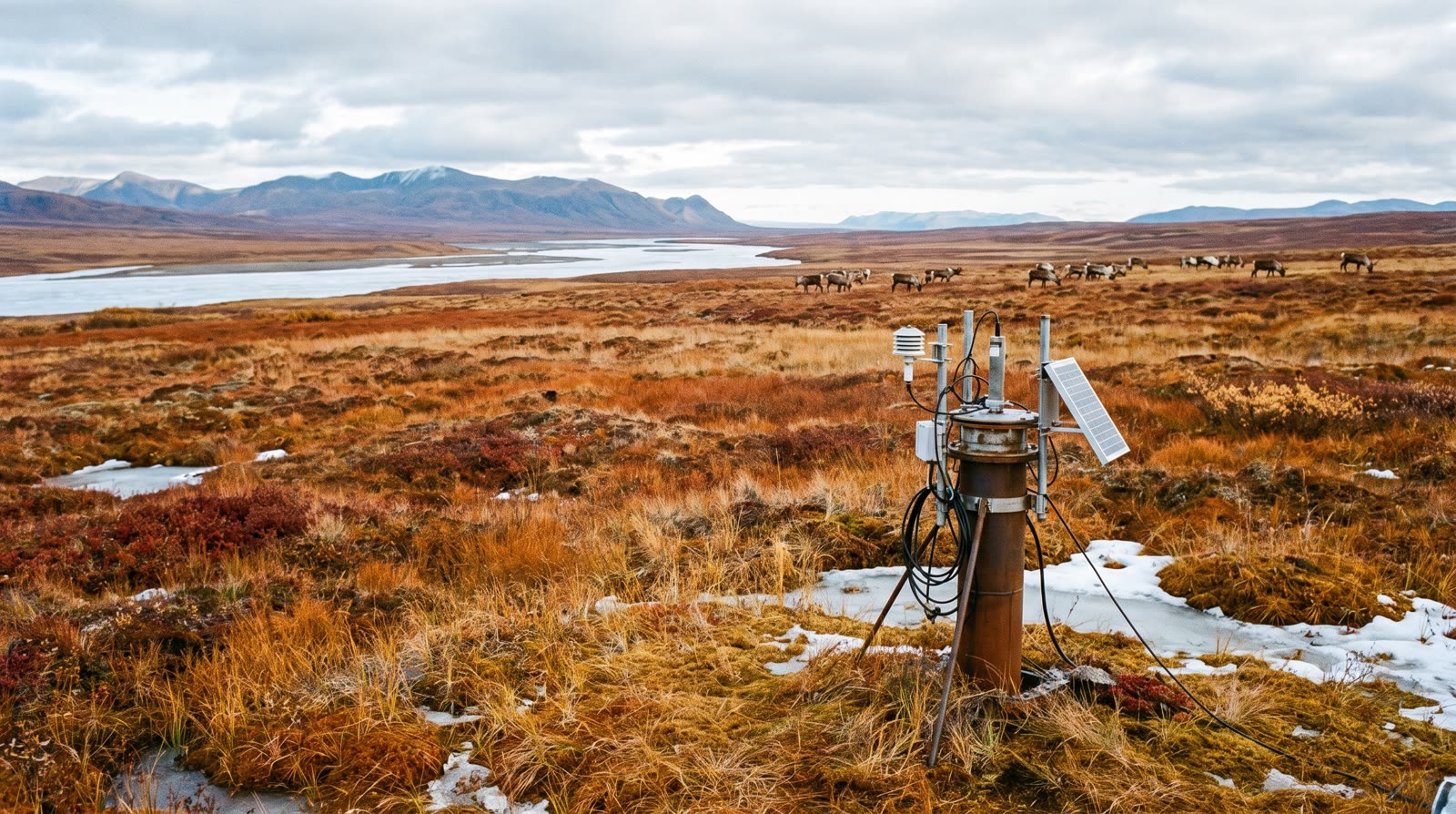
Our focus now
Permafrost monitoring
Borehole loggers store a year of readings until someone travels out to collect them. A logger that fails in autumn costs you the year.
With Nuna
- Readings arrive through the season
- Nodes sleep between scheduled slots, so the battery goes to measuring
- Built for the cold and tested to -40°C in a climate chamber
What you might measure
- Ground temperature
- Soil moisture
- Active layer
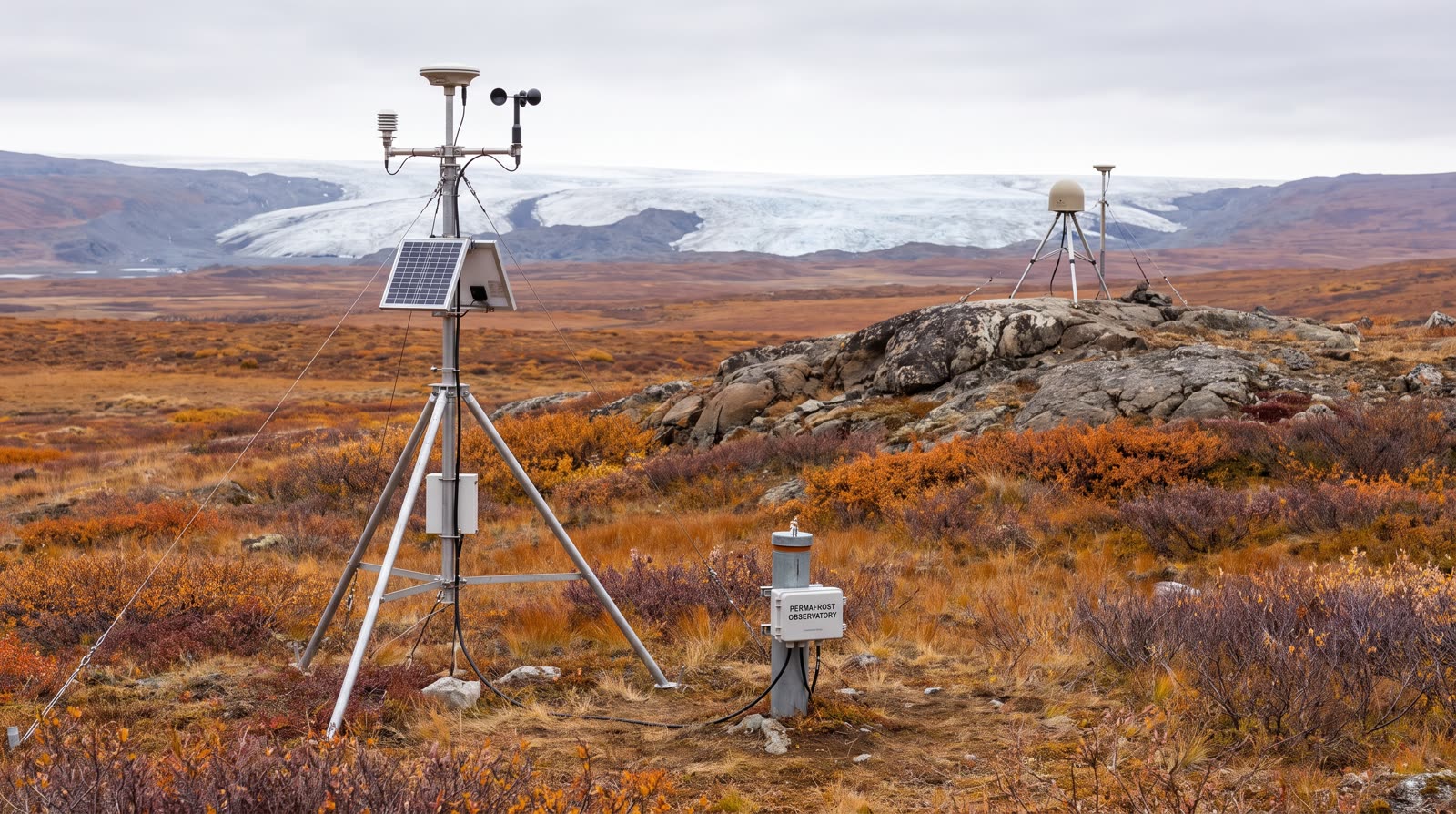
Our focus now
Seismic and geodetic stations
Seismometers and GNSS receivers record locally for months. Their state of health often comes home on the same trip as the data.
With Nuna
- State of health from every station, all season
- Battery, temperature and recording status on one network
- Raw data stays on the station, the mesh carries what tells you it works
What you might measure
- Station health
- Battery voltage
- Enclosure temperature
- Event summaries
Where we are heading
Remote infrastructure
Assets in remote terrain are checked by visit. Sensors help only if their readings can reach someone.
With Nuna
- Sensors along a route relay to one another toward one uplink
- No mobile coverage needed along the way
- A node that fails is routed around
What you might measure
- Strain
- Tilt
- Water level
- Temperature
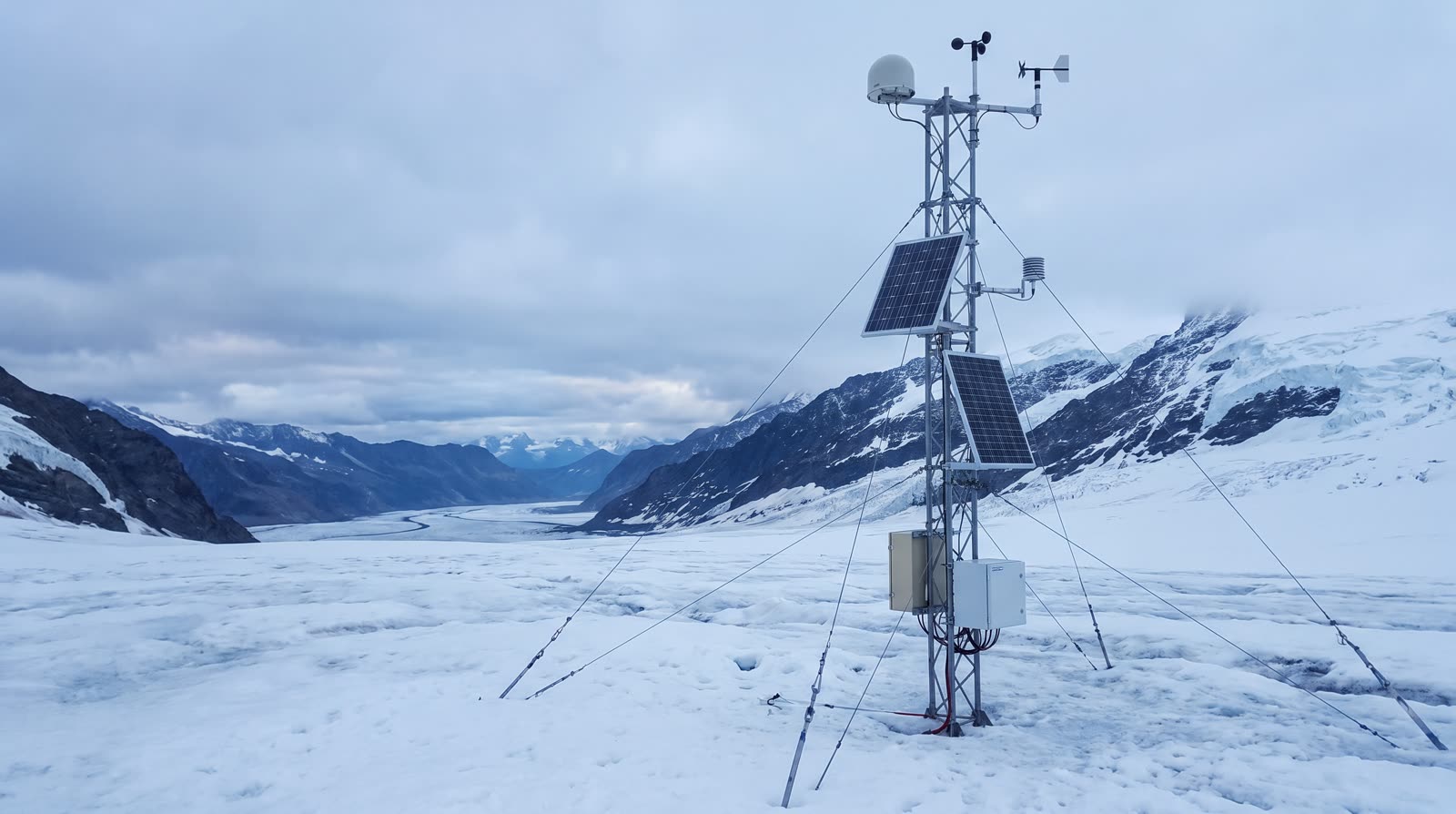
Where we are heading
Ground truth for satellites
Satellite products need measurements on the ground to validate against, and the places that matter most are the hardest to reach.
With Nuna
- Spread ground sensors across a satellite footprint
- One uplink returns the whole grid
- Every reading stamped on one network clock
What you might measure
- Surface temperature
- Snow and soil moisture
- Albedo
Your site looks different?
Tell us what you measure and where. That is the conversation worth having now.