Origin
From a student team to a company
We met at DTU X-Tech in spring 2026, with business, computer science, hardware and embedded systems in one team. The problem came from the researchers we talked to: getting data out of a place with no coverage and no power means sending someone out to fetch it. We thought the radios could do it instead.
The first node was Marcus's bachelor thesis at DTU, an 868 MHz LoRa mesh node built for the cold. We won the PSV Advancement Award at X-Tech, then moved into X-Tech+ and the DTU Skylab Incubator.
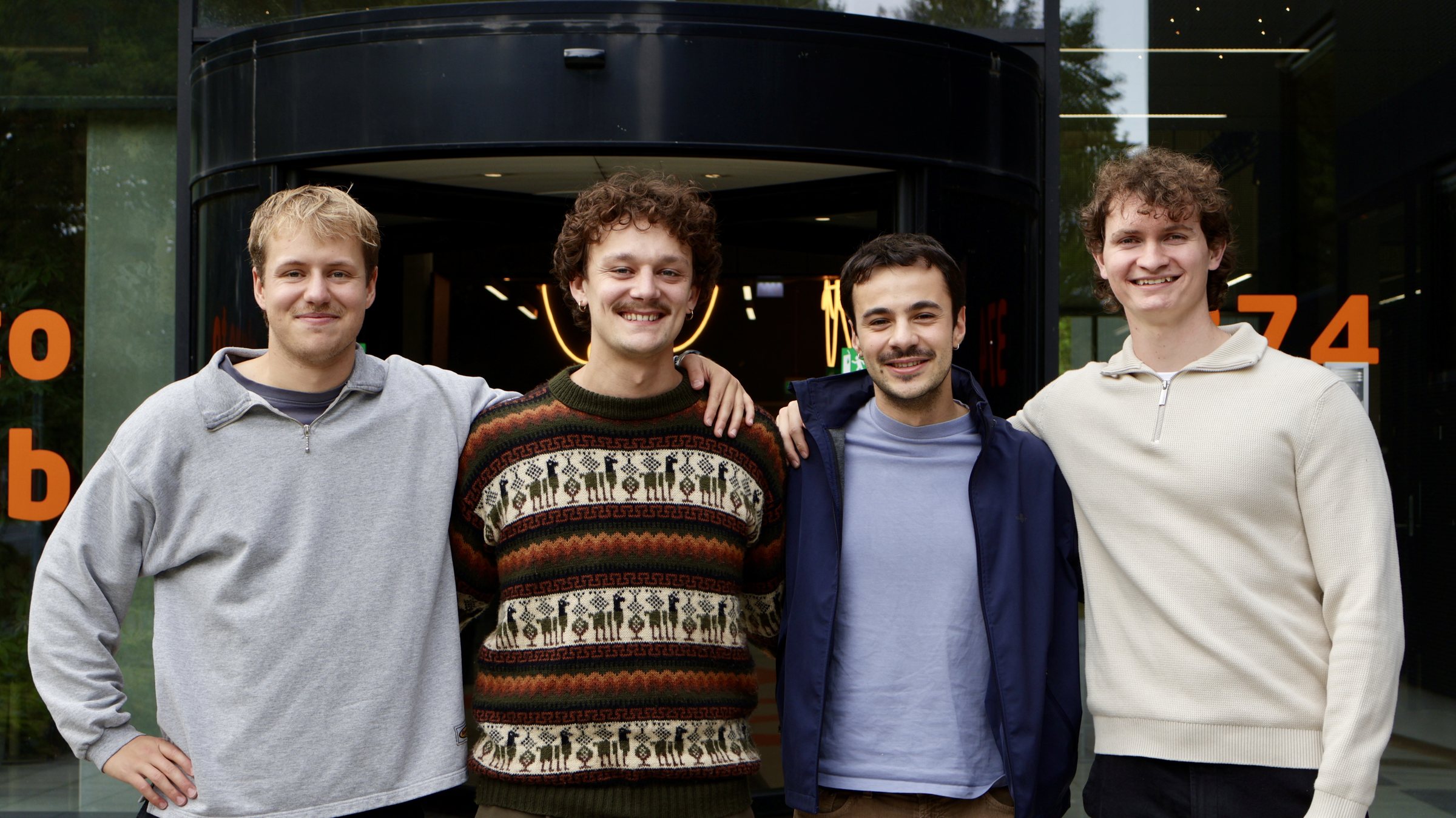
The team
Who we are




Mission and values
Our mission is to enable environmental monitoring in the most remote places on earth.
Low power by design
Our nodes spend almost all their time in deep sleep and run on a small battery, so a whole network uses very little power. Less power to supply means less hardware to fly out to a site.
Built to be repaired
We plan to offer the hardware as a serviced subscription. When a node fails, you swap it in the field and we repair it centrally, so it goes back out instead of into a bin.
Why the Arctic
A sensor stops in October, and nobody finds out until summer.
The Arctic is changing faster than it is being measured. Satellites cannot see through cloud or polar night, so the ground has to be measured on the ground. Stations are expensive to reach and to connect, so there are fewer of them than the science needs, and the gaps between visits leave data blind spots.
Where we are
Based at DTU Skylab, Lyngby
We build and test in Denmark, and our v0.2 nodes are running on DTU campus. The first field deployment is in Denmark in winter 2026, then Greenland in summer 2027.
- DTU X-Tech2026 winner
 Advancement Award
- DTU SkylabIncubator