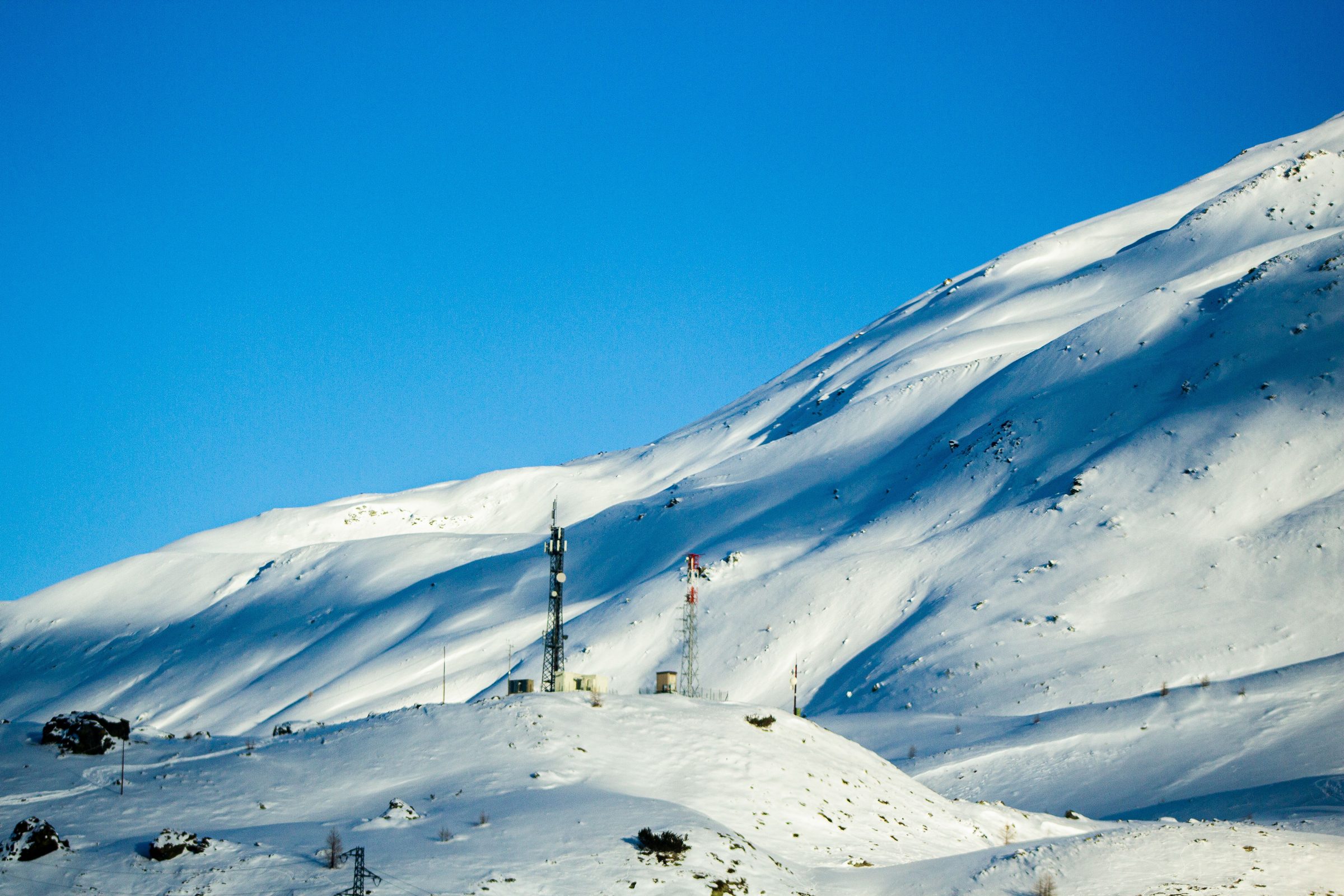
Arctic sensor networks
Connecting the Unreachable
Data home from the most remote places, over one radio network with one shared uplink.
- DTU X-Tech2026 winner
 Advancement Award
- DTU SkylabIncubator
What we do
A terrestrial network for sites with no infrastructure.
Data blind spots between visits, and an energy-inefficient terminal at every station. We replace both with one telecommunication network, designed and tested for the Arctic.
The full technology, with every detail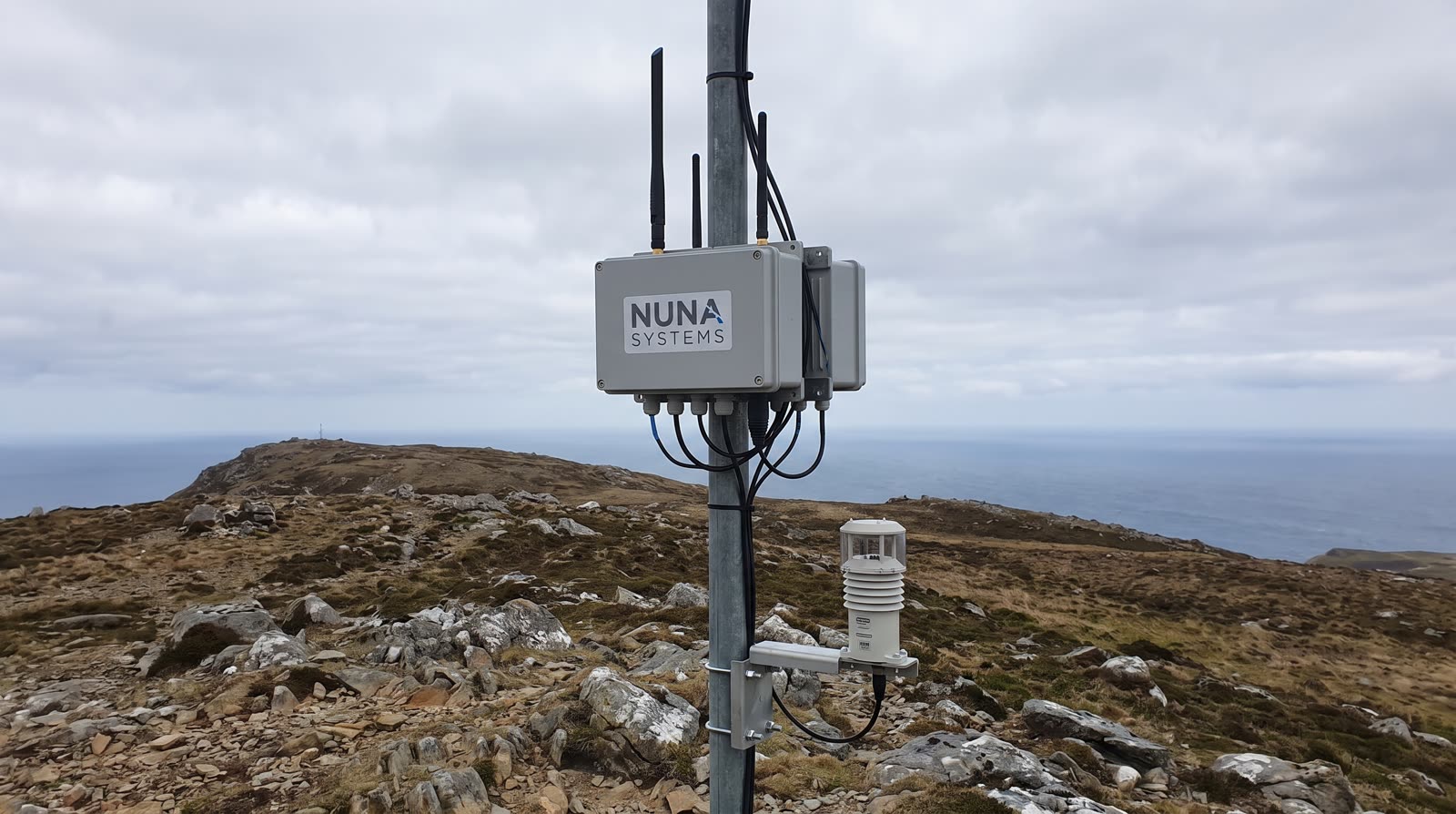
01
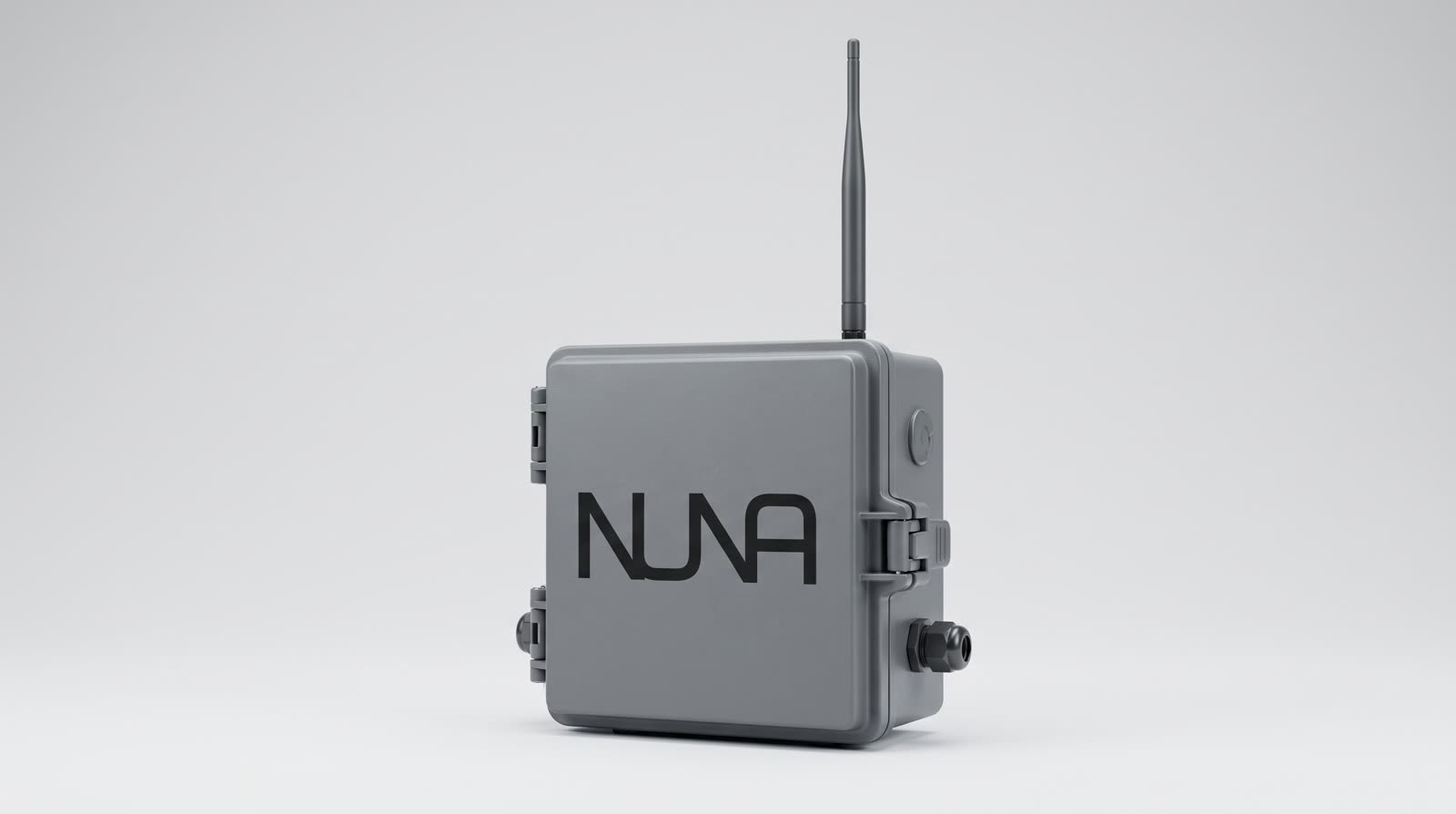
A node goes on each station
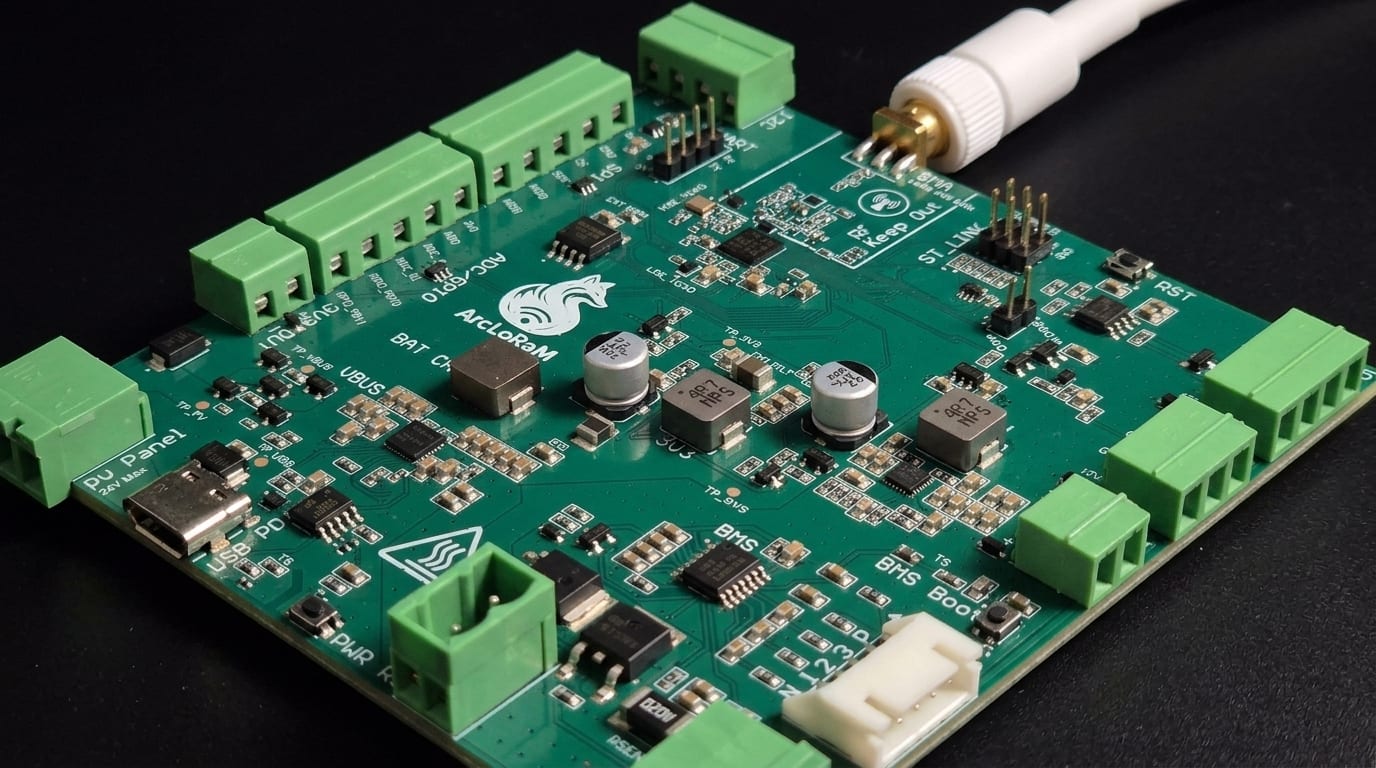
One battery-powered radio on the mast you already have. No infrastructure needed.
02
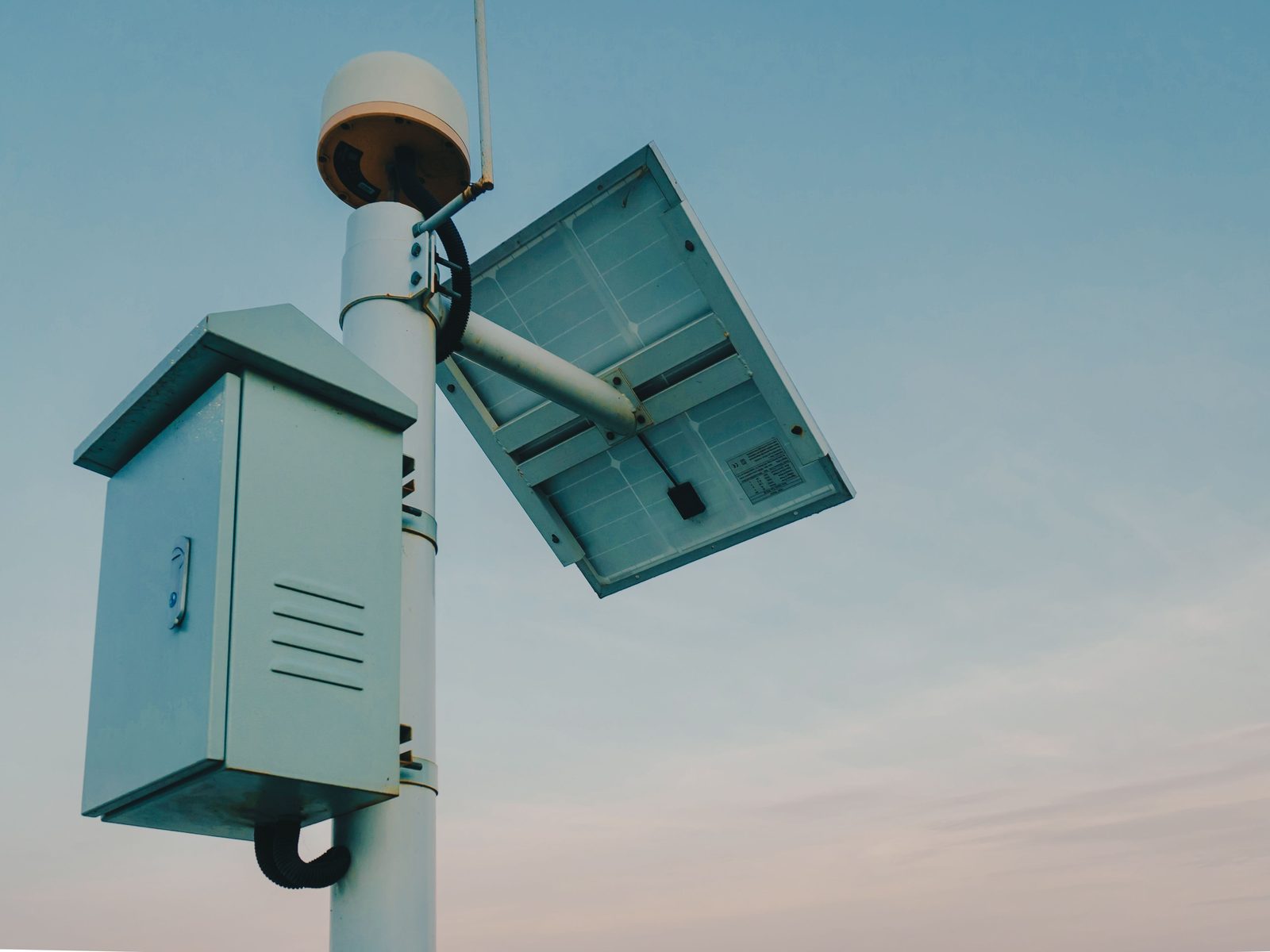
The nodes form one self-healing network
If one node drops out, the others route around it. Built so no data is lost.
03
Each node sends in its own time slot
A shared schedule tells every node when to send. In between, it stays in deep sleep.
04
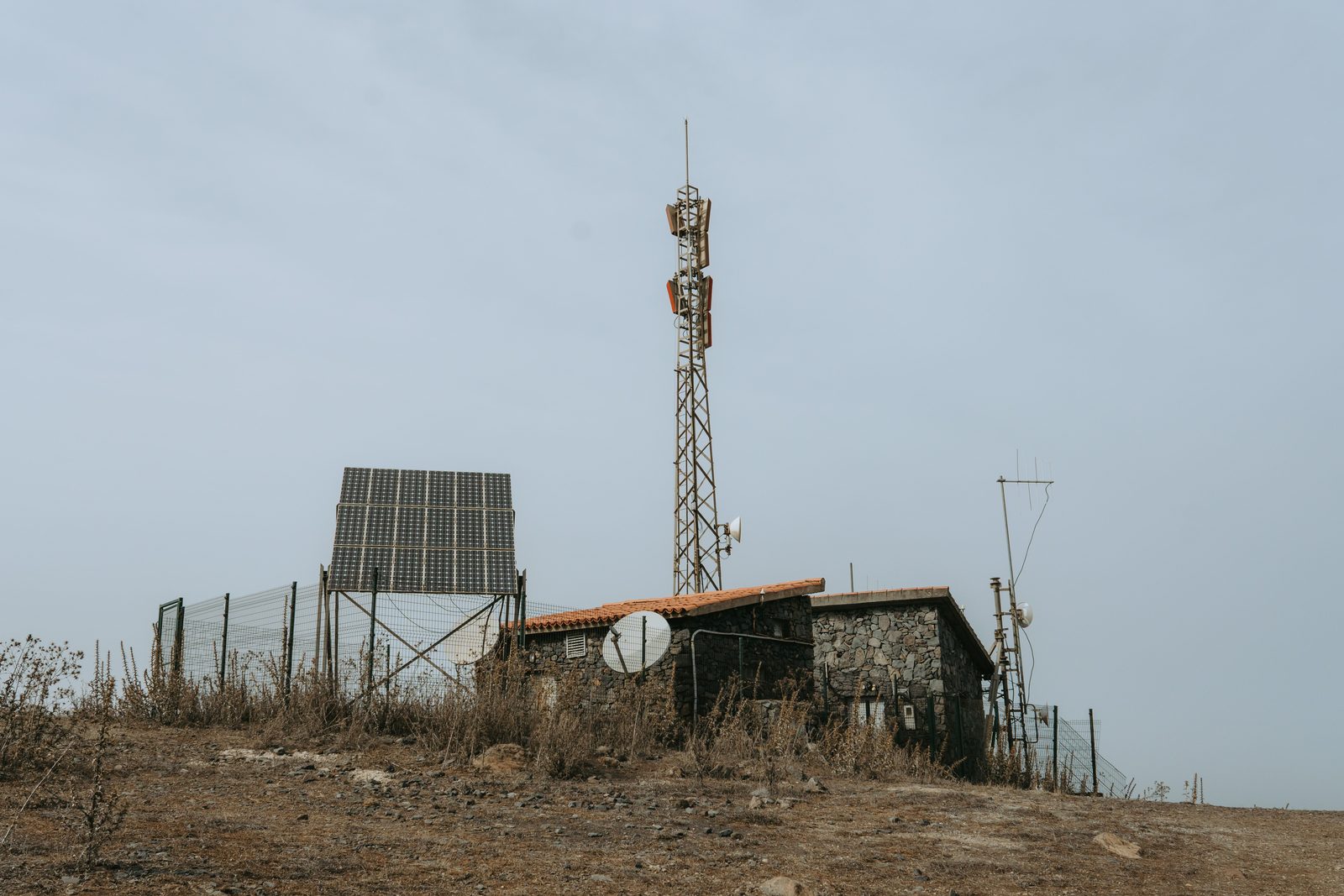
One uplink carries it home
One connection for the whole site. A quiet station shows up in the data.
Use cases
Who we help, and what changes for them
 Our focus now
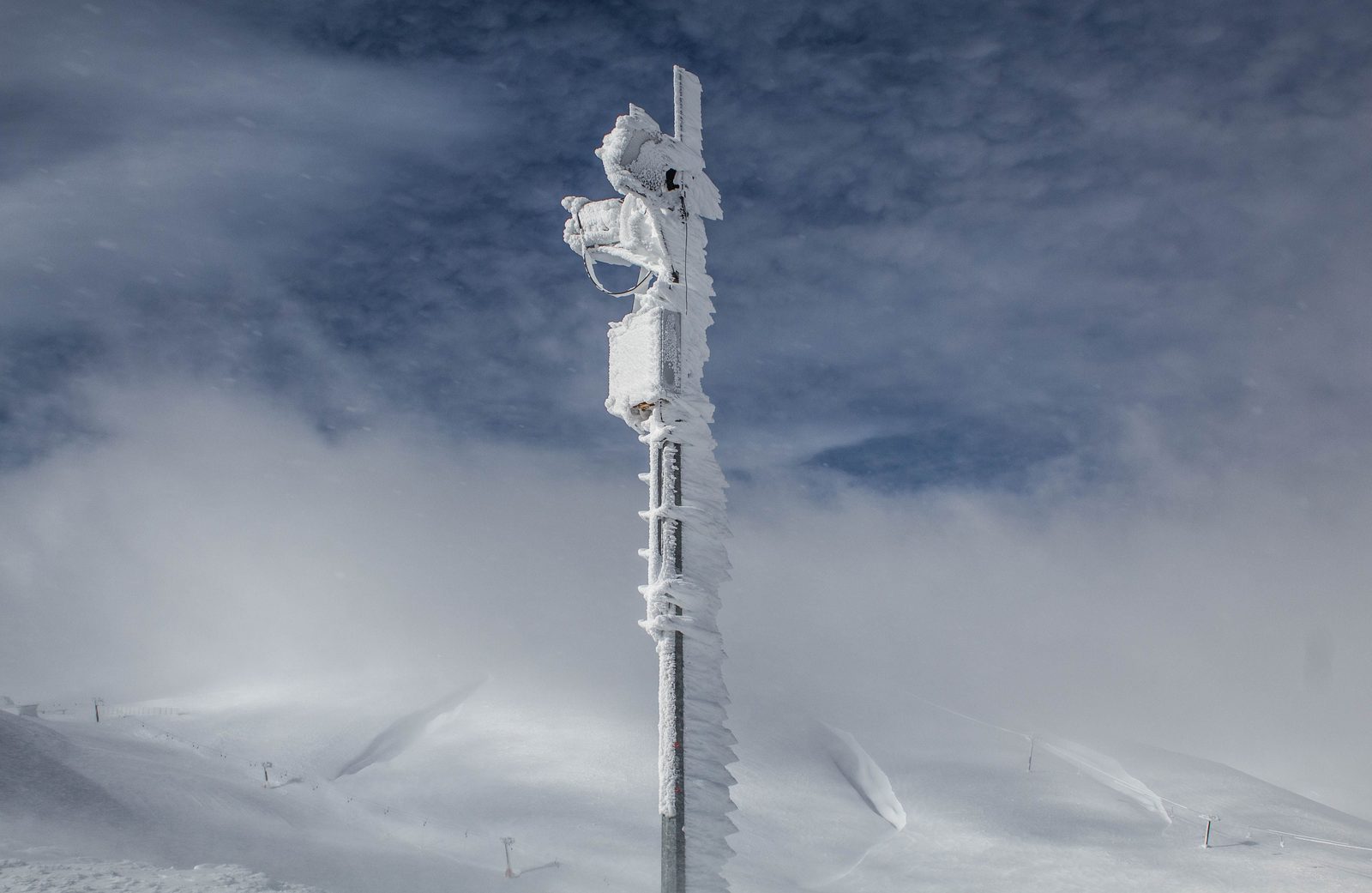
Environmental monitoring
- Who
- Polar institutes and research field stations
- Pain
- A sensor fails in October and nobody knows until summer
- Solution
- Every station reports all season, through one uplink
 Where we are heading
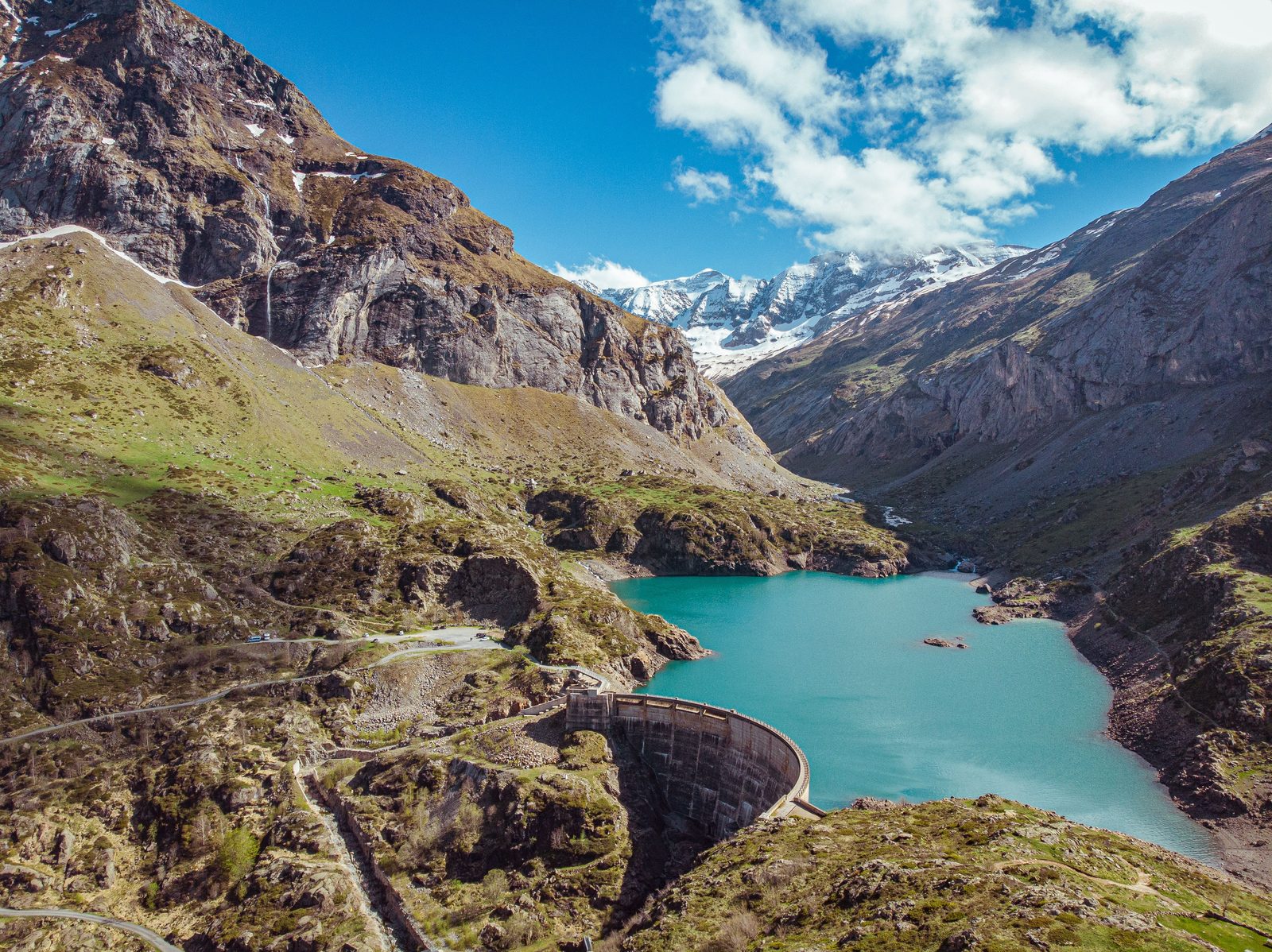
Assets and critical infrastructure
- Who
- Operators of power lines, pipelines and dams
- Pain
- Assets far from a mobile network are checked by visit
- Solution
- Sensors along the route relay to one uplink, with no coverage needed
 Where we are heading
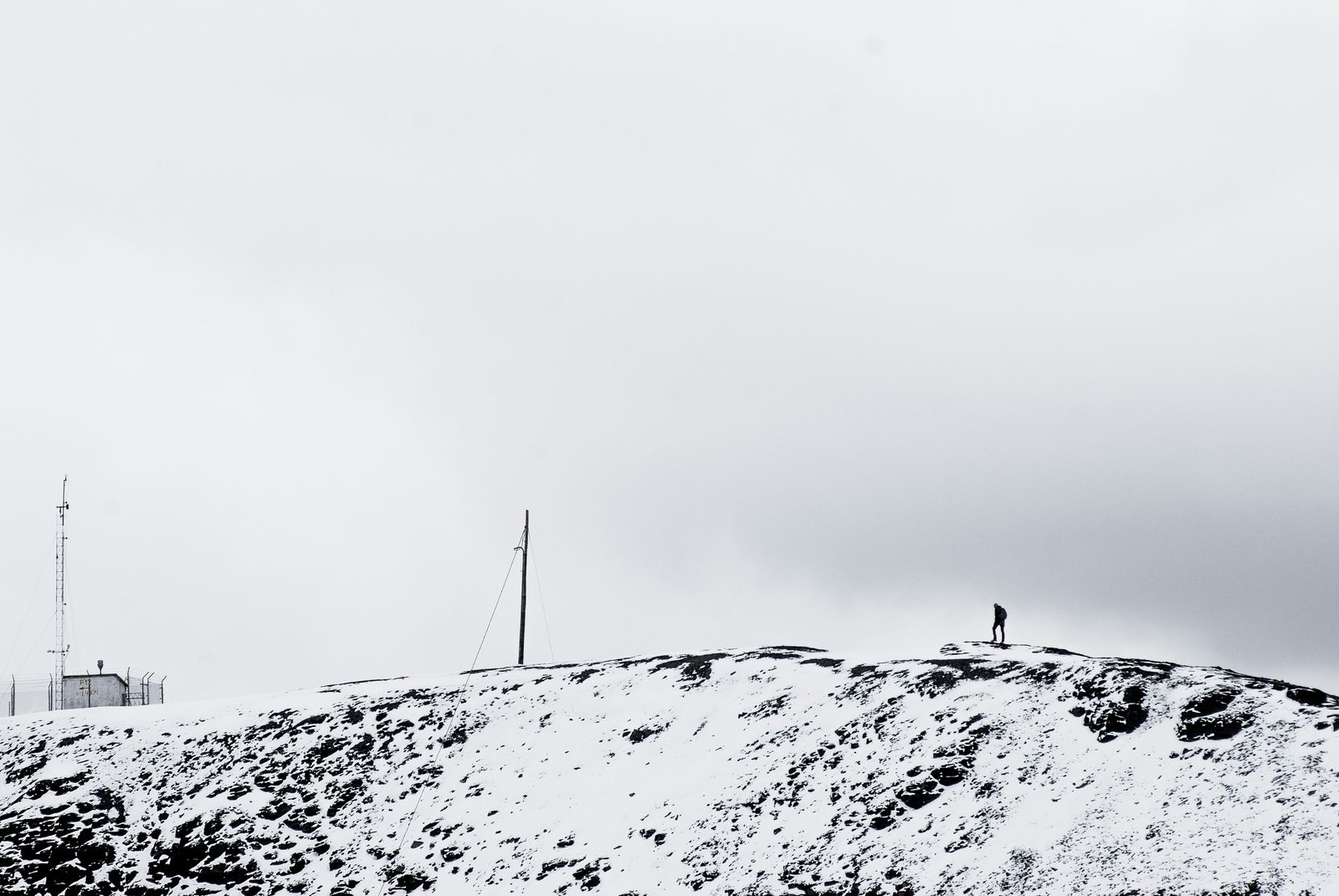
Satellite Earth observation
- Who
- Teams who calibrate and validate satellite data
- Pain
- Ground truth is hardest to get where it matters most
- Solution
- A grid of ground sensors, on one clock, home through one uplink
The software
Plan the site on real terrain. Watch it from one screen.
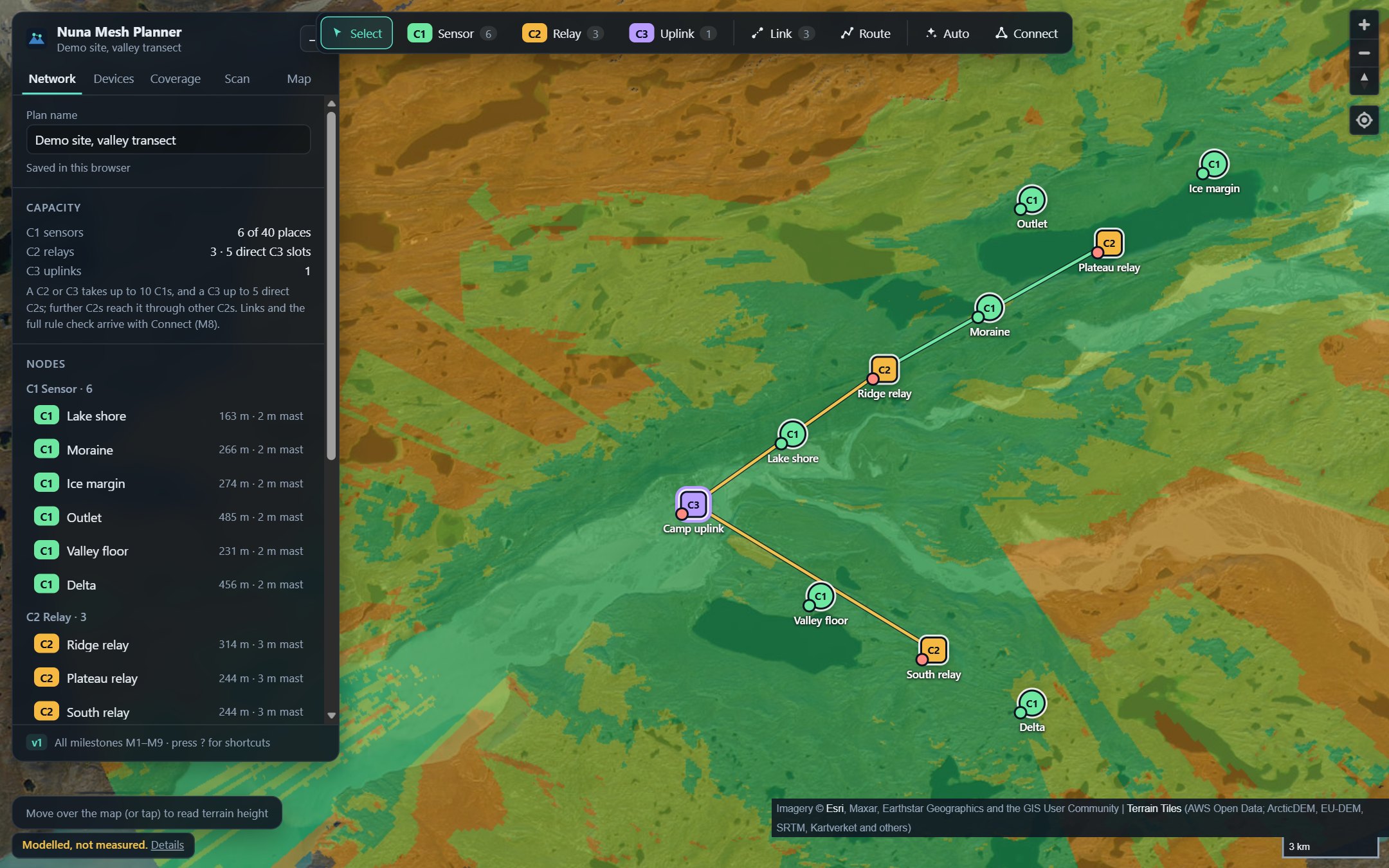
Mesh planner
Plan every node and link on real terrain before anyone flies out. Results are modelled, not measured.
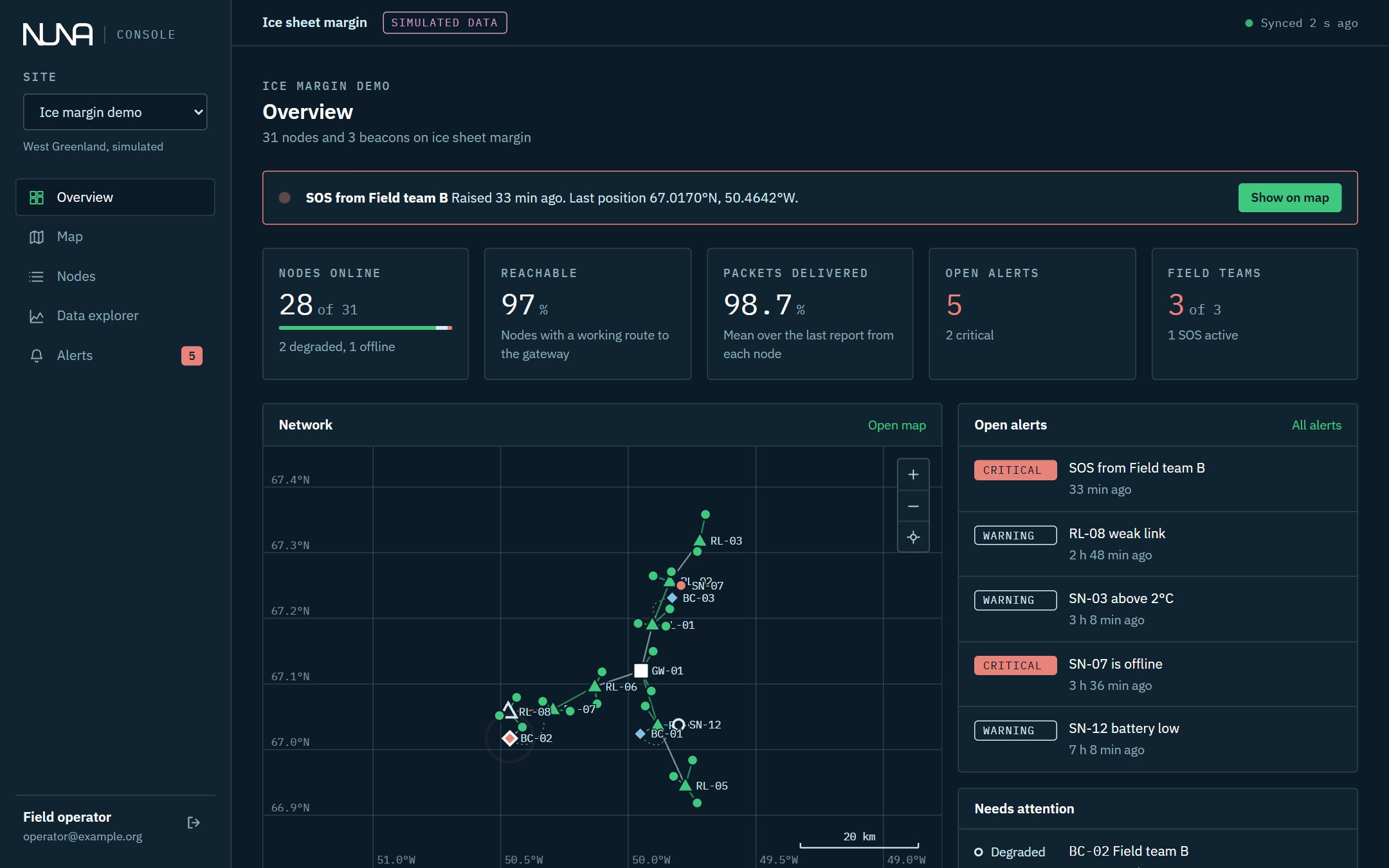
NUNA Console
Every node and field team on one screen, with an alert when something goes quiet. Shown with simulated data.
Where we are
The first tests passed, and the field comes next.
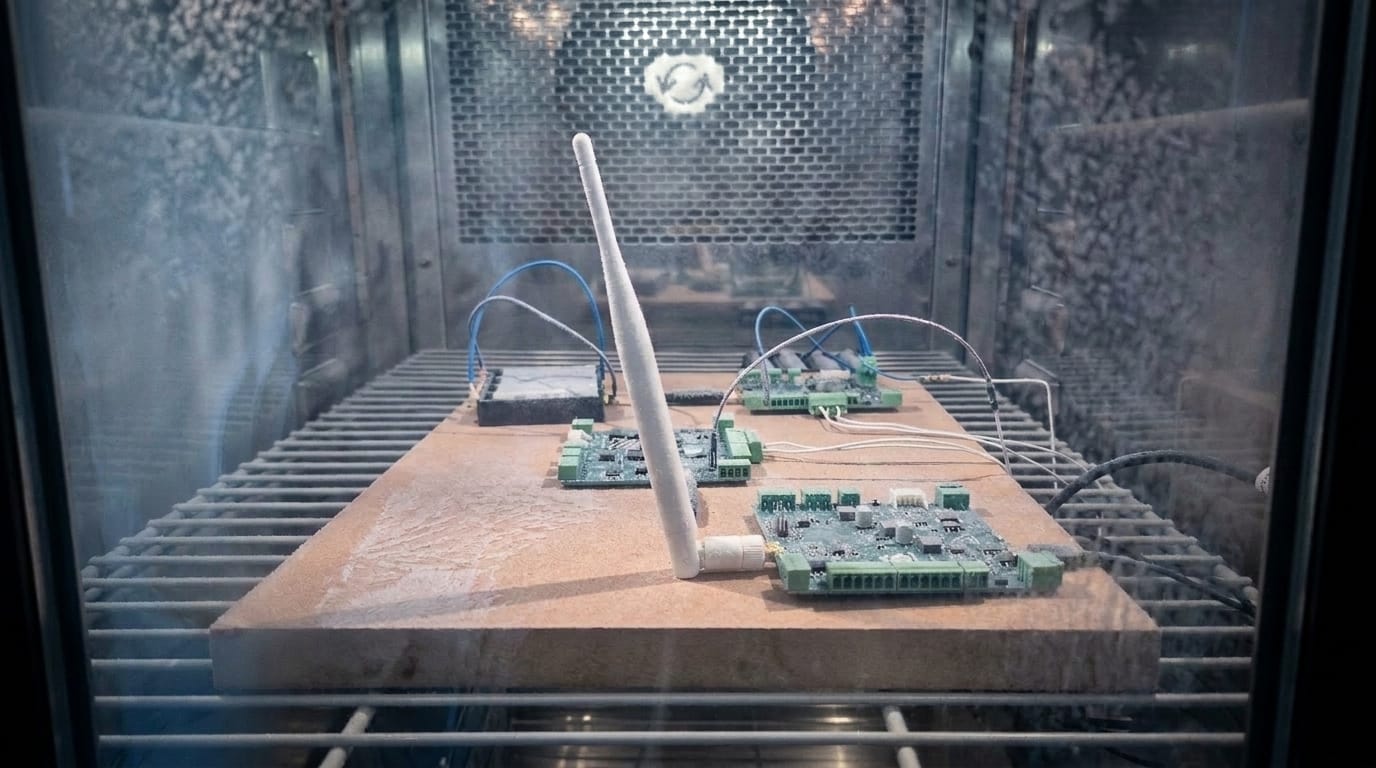
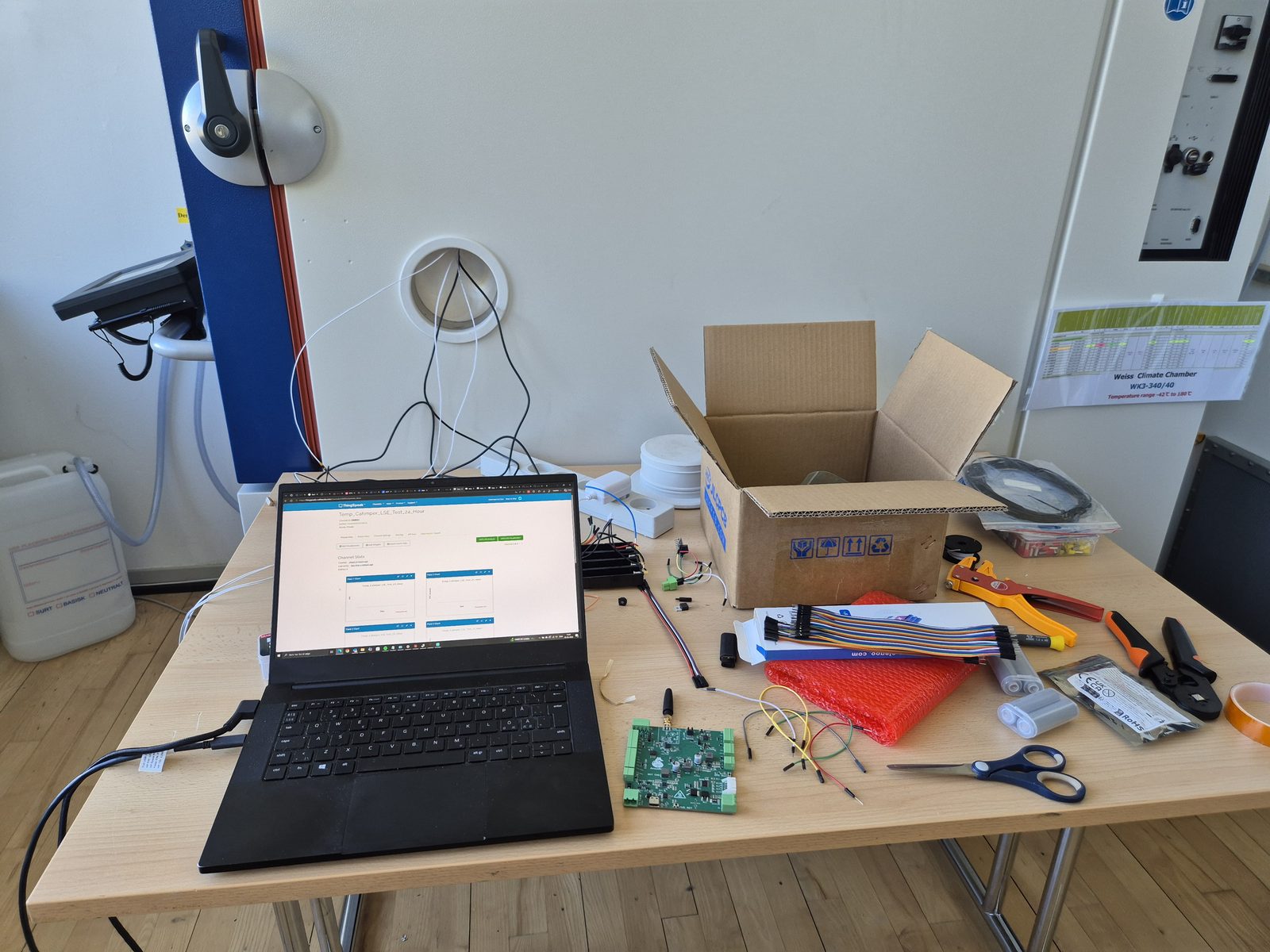
- In a climate chamber at DTU
- tested down to minus 40 degrees Celsius
- LoRa packets sent at -40°C, acknowledged by the receiver
- over 98 percent of about 19,600 LoRa radio packets sent at minus 40 degrees Celsius were acknowledged by the receiver
- Area one network is designed to cover target
- about 31,000 square kilometres, a V2 design target
Next is the V2 node in a weatherproof casing, then our first field deployment in summer 2027.
Built at DTU
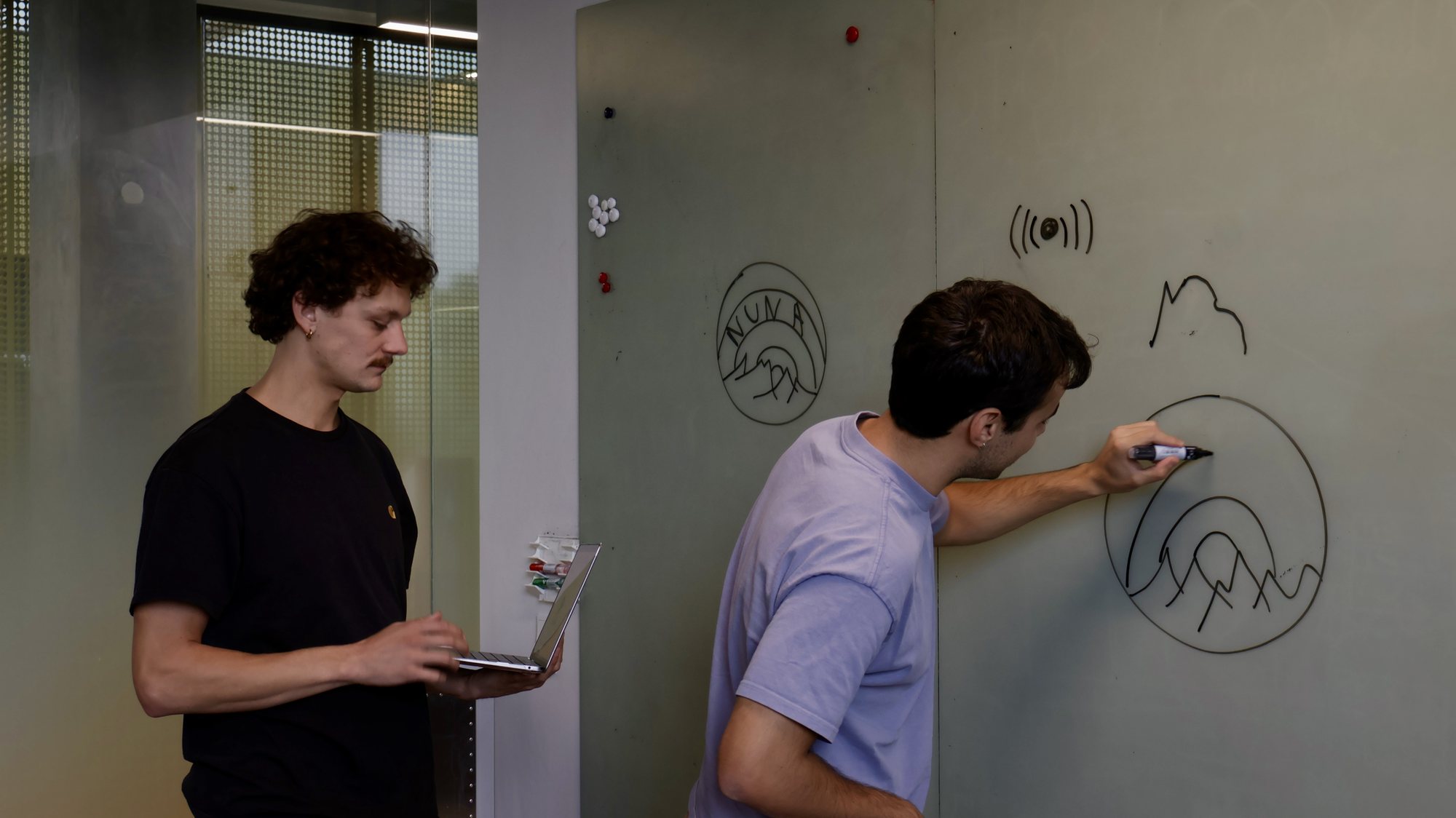
Four of us, at DTU Skylab in Lyngby.
Planning a field season?
Tell us what you measure and where. We read everything ourselves.
Tell us about your siteOr follow the build
We use your address to send occasional updates. You can unsubscribe from any email. See our privacy page.